
Employers hand out small rewards left and right (a coffee here, a holiday basket there), and most of them never stop to think that the IRS has a written position on nearly every bit of it. These gestures seem small in the moment, so the tax side of them doesn’t come up. The de minimis fringe benefit exclusion covers the basics. The fine print around value, frequency and reward type creates tax exposure for the payroll teams that assume well-meaning intentions are enough.
A $25 gift card is easy to misclassify, and if that happens, you’ve just created unreported taxable income where there wasn’t any, which turns into the sort of payroll correction that no one has the time or the budget to sort out. These are the situations that like to surface during an audit (not during a scheduled payroll review) – that’s usually when it’s too late to fix cleanly.
The questions around this are valid for HR managers and small business owners. There’s no hard dollar cap written anywhere in the tax code. Cash and gift cards will fail the test, no matter the amount, and a benefit that qualifies now can lose its status just by being handed out too frequently. None of that’s intuitive, and there’s no warning label on any of it. What makes it worse is that when something does go wrong, the cost lands on the employer, not the employee.
Let’s go through the de minimis exclusion so you can reward your employees with confidence.
The IRS on De Minimis
The IRS defines a de minimis benefit as any benefit so small in value that it would be unreasonable or administratively impractical to track. That said, the language is pulled directly from the tax code, and the wording is deliberately loose. No hard dollar cap exists anywhere in the law itself. None at all.
That’s where payroll teams run into problems. Most of them will point to $100 or less as an informal guideline. That number does get passed around quite a bit in day-to-day practice.
The problem is it doesn’t actually come from any particular law or regulation – it’s more of a working reference that has evolved over time through IRS advisories and years of accumulated professional practice. No firm standard exists that anyone can point to on paper.
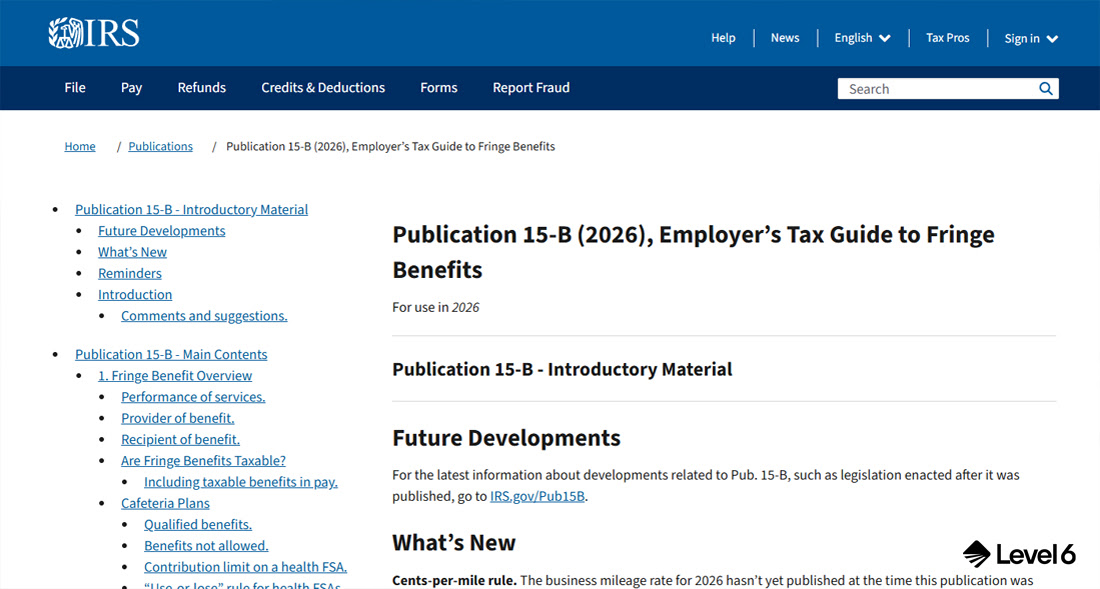
The IRS does cover de minimis benefits in Publication 15-B. Going right to the source is worth your time – it walks through examples of what qualifies and what doesn’t, and at least gives you a decent starting point. The frustrating part (especially for payroll teams) is that it still leaves a number of situations open to interpretation. Most payroll teams just want a hard number they can apply across the board and move on – and the IRS doesn’t hand that to them.
The tough part about this standard is that it doesn’t give you a hard number to work with – it can all depend on judgment. A $10 gift card is almost always fine. A $500 gift card is almost always taxable. Everything in between those two is where it gets messy, and in my experience, that gray area is right where most businesses end up spending their time.
Not every in-between case has a perfect answer – it’s just part of the job.
Small Gifts That the IRS Does Not Tax
The IRS has a handful of tried-and-true examples that pass the de minimis test without much debate – a birthday bouquet, a holiday turkey, a round of snacks in the break room or the occasional event ticket. That last qualifier is carrying actual weight. A single bouquet of flowers is a gesture – a monthly flower delivery starts to look more like compensation. Frequency matters to the IRS just as much as the dollar amount does – it’s a detail a fair number of employers miss.

What ties these examples together is that they’re low-cost and nearly impossible to track as income in any way. The IRS has long taken the position that when the administrative burden of accounting for a benefit outweighs its value, it just doesn’t make a whole lot of sense to tax it. That line of reasoning traces back to foundational case law, and it’s been reinforced over the years through a few different IRS rulings.
Here’s one way to look at it – if it would feel very burdensome for a normal person to put a dollar value on something and report it on a W-2, that’s a pretty strong sign the item might qualify. A cup of coffee or a small birthday cake isn’t something any payroll department should have to sit down and itemize. That common-sense logic is actually built right into how the provision was designed to work.
It also helps to explain why these small gestures have stayed non-taxable benefits for as long as they have. Employers were never meant to account for every little act of goodwill at work – the de minimis exemption is the IRS putting that in writing. As long as the cost stays low and the gifts don’t become too frequent, there’s usually not much to worry about.
Rewards That Always Count as Taxable Income
Cash is the easiest example that the IRS gives for what won’t qualify as de minimis – it doesn’t matter if the amount is only a couple of dollars. Any cash handed to an employee gets counted as taxable wages, period. No exceptions and no gray area at all.

Gift cards fall into the same category as cash – even if they’re only worth $25. The IRS classifies them as cash equivalents because any gift card ties back to a direct dollar value, which puts them squarely in the compensation column as far as the law is concerned – that’s one area where the IRS just doesn’t make exceptions, and it’s probably the most common misconception I come across.
Plenty of well-meaning managers make this mistake. A $25 gift card to a coffee shop is still a cash equivalent in the eyes of the IRS. What matters to them is what the reward actually is. A gift card is a gift card – $5 or $500, whatever the occasion.
Recurring extras also fail the de minimis test. A gym membership, say, has a fixed price and shows up on a set schedule, so it falls well outside de minimis territory. Season tickets work the same way – they have real and measurable monetary value and get handed out on a repeat basis. Neither of these is the low-value and infrequent benefit that the IRS had in mind when it wrote this exclusion.
The IRS draws this line for a pretty sensible reason – some rewards are just too close to normal pay to be treated any differently. Once a reward has a direct cash value attached to it or gets paid out on any steady schedule, the IRS will count it as extra income. That standard is the same everywhere, no matter how small the amount is.
Perk Frequency Matters
Frequency is actually one of the most missed parts of de minimis. A $10 gift card on its own feels pretty harmless. Hand one out to every employee each week, and it starts to look like a steady form of compensation. At that point, the de minimis exemption may no longer apply.

With any workplace benefit, it can all depend on frequency – whether it happens every now and then or has become expected. A reward that shows up on a predictable schedule looks a bit like compensation. And the IRS is very much aware of this pattern.
A great example here is the classic “Friday team lunch.” Businesses treat it as a company tradition (a way to boost morale and make the team feel liked), and there’s nothing wrong with that. But from a tax standpoint, it can become a genuine problem. A benefit that goes out on a set schedule is much harder to defend as de minimis than a one-time lunch after a big milestone or after a big project finally gets done.
Any benefits that your company hands out on a repeating schedule are worth a second look. The frequency of a reward matters just as much as its cost – maybe even more. A small reward that goes out every month or every quarter could mean more in tax exposure than a bigger reward that only ever happens once.
Payroll Tax Risks That Come With Misclassified Rewards
The stakes here are high – a reward that crosses into taxable territory and goes unreported gets treated by the IRS as missing income. That won’t stay unresolved for long either, and when they find it, they’ll come back with back taxes, interest and penalties.
The obligation to report and withhold is on the employer (not the employee) – full stop. If gift cards or cash bonuses have been paid out without being recorded as wages, that’s a liability that your business is carrying. The employee walks away without a second thought about it. Your business is the one left to answer for it.

The employer exposure in this area is also quite underestimated. During a payroll audit, the IRS actively looks for patterns of unreported fringe benefits – and a long history of non-cash rewards that were never recorded as compensation is exactly what gets flagged. What the records show over time is what matters.
Back taxes on unreported compensation always carry interest, and the longer the gap goes unaddressed, the more penalties can pile on top. The IRS has audited employers across just about every industry for this exact payroll issue, and it almost never ends cheaply. A reliable tracking system put in place now will save you grief compared to trying to untangle years of unreported rewards after the fact.
The better news is that the IRS is not especially in the business of going after employers for honest one-time mistakes. What actually creates problems is a pattern – and it gets especially messy when there’s no paperwork or policy trail to show that the employer even had any awareness of the de minimis threshold at all.
Plans That Let You Give Tax-Free Rewards
There’s a legitimate and tax-friendly way to manage it. Achievement awards under IRC Section 274(j) let employers hand out as much as $1,600 tax-free – and all it takes is the award being part of a qualified written plan. For most businesses, $1,600 is a pretty generous ceiling, and it gets around the tax problems that informal reward programs usually bring.

The structure of a qualified plan is what actually makes it work. To qualify, a plan needs to be put in writing and has to treat everyone fairly, with no added benefits for well-paid employees. The award itself has to be a physical item – a watch, some equipment or something tangible like that. Cash is out, and so are gift cards. The IRS set these boundaries for a reason: to separate what counts as genuine recognition from what would otherwise just be extra compensation under a different label.
Accountable reimbursement plans are another idea. With one of these in place, an employer can cover qualifying employee costs so it never becomes a taxable event – as long as the costs line up with IRS laws and any unused money gets returned within a set timeframe.
These two options were built with the same goal in mind – to give employers an easy and legal way to reward their employees so no one on either side ends up with an unexpected tax problem. The issue is that workplace reward programs were never designed around either of these categories. Take a step back and ask if your program fits into one of these two structures or if it falls somewhere in between – because that gray area is where the tax treatment gets considerably harder to work out.
Do You Need a Tax Pro
Most businesses can run their own rewards program without any outside help. The de minimis laws do have a bit of a reputation for being tough. But in practice, plenty of small teams work through them just fine on their own.
That said, a few it-matters moments come up where a tax professional is well worth the cost and one of the biggest ones is right at the very start, well before a new rewards program goes live.
The other time to bring in some help is when your team starts to grow. What works just fine at ten employees can get pretty messy once you’re at fifty or a hundred. De minimis benefits aren’t always black and white, and the IRS sure doesn’t hand you a checklist to work from. A tax professional can look at your situation and tell you exactly where you stand.

If an IRS letter about your employee benefits or gift reporting has already shown up, get a professional involved immediately. A letter doesn’t automatically mean you did anything wrong – it just means the stakes are high enough to get another set of trained eyes on it.
Expert help is really more of a pressure check. The instinct to want to take care of this on your own makes sense, and for programs that are fairly cut and dry, that usually works out just fine. De minimis tax law does have some gray areas, though, and one conversation with a CPA or tax advisor can go a long way to double-check that your program is actually set up correctly.
Level Up Your Incentives and Rewards
Value, frequency and reward type – these three factors carry serious weight, and a sense of all three puts you in a much better position than the average business owner. Most workplace reward programs were built with well-meaning intentions, just without much thought about how the IRS actually views them. For most business owners, payroll compliance is one of a dozen demands competing for their attention at any given time, and they’re doing their best with the information they have.
A place to start is with a look at what your team is already doing. If your rewards program has been running on autopilot for a while, you should raise a few honest questions about the rewards you currently have – are they now and then or standard, low-value or borderline and tangible or a cash-equivalent? Those three questions alone can tell you quite a bit about where your program stands and if maybe it’s time to sit down with a tax advisor.

At Level 6, this is the work we do every day. We partner with businesses to design incentive and recognition programs that are well-structured and built to drive actual results, from stronger sales numbers to a more invested and motivated team. A free demo is the best first step, so contact us, and we’ll show you how we help high-performance businesses get more out of the team they already have.