By Claudine Raschi, MS · Last updated: April 2026
Quick Answer: What Are Commission Structures for Sales Teams?
Commission structures for sales teams are the rules that determine how sales representatives earn variable pay based on their performance. The 12 most widely used sales commission structures range from straight commission to tiered plans, gross margin models, and team-based programs. The right structure depends on your sales cycle length, product complexity, and revenue goals.
Few decisions shape sales performance more directly than how you pay your team. Commission structures for sales teams determine which behaviors get rewarded, how aggressively reps pursue quotas, and whether top performers stay or leave for a competitor. Get the design wrong, and you generate the wrong behaviors — or lose your best people.
Research from Harvard Business School confirms that compensation systems linked to individual performance outcomes — commissions and quota-bonuses — are the most reliable tools for aligning a salesperson’s interests with those of the firm. Yet most companies implement plans built on intuition rather than design principles.
Below, we break down all 12 commission structures for sales teams, with real formulas, industry benchmarks, and guidance on which model fits which situation. We also cover how Incentive Compensation Management (ICM) technology makes the right structure enforceable at scale.
What Is a Sales Commission Structure?
A sales commission structure is a defined set of rules that determines how a sales representative earns variable pay. It specifies the performance metric (revenue, margin, units), the calculation method (percentage, flat amount, tiered rate), and the payout conditions (quota attainment, time period, product type).
Most commission structures for sales teams combine a base salary with variable pay. The mix — often called the pay mix — describes the ratio of fixed to variable compensation. A 60/40 pay mix means 60% is guaranteed base salary and 40% comes from commissions. Sales commission structures with a 50/50 pay mix are common for account executives in B2B environments, while sales development representatives (SDRs) typically operate on a 70/30 or 60/40 split that skews toward the base.
The on-target earnings (OTE) model anchors most modern commission plans for sales teams: OTE defines what a rep should earn if they hit exactly 100% of their quota, combining base salary and the full variable component. We explore how to calculate OTE across all 12 models in our sales commission calculations and formulas guide.
Why the Right Commission Structure Matters More Than the Rate
Commission structures for sales teams do more than set a paycheck — they encode a strategy. If you reward revenue volume, reps optimize for volume. If you reward gross margin, reps protect price. If you reward team output, reps collaborate. Structure determines behavior; rate only determines degree.
A foundational study from Harvard Business School found that commissions uniformly motivate all salespeople — high, mid, and low performers — when structured correctly. Overachievement commissions are especially effective at keeping top performers engaged after they hit quota. The same research shows that capping commissions at a ceiling consistently demotivates high performers and should be avoided in competitive environments.
According to Harvard Business Review, most companies have not evolved their sales compensation structures to keep pace with how the B2B selling environment has changed — creating a persistent gap between what plans reward and what revenue actually requires.

The 12 Sales Commission Structures Compared
The table below summarizes when to use each commission structure for sales teams, along with the key trade-off at a glance.
| Commission Structure | Best For | Key Trade-Off |
|---|---|---|
| Straight Commission | High-volume, transactional roles | High motivation, no income floor |
| Base Salary + Commission | Most B2B field sales | Balance of security and performance |
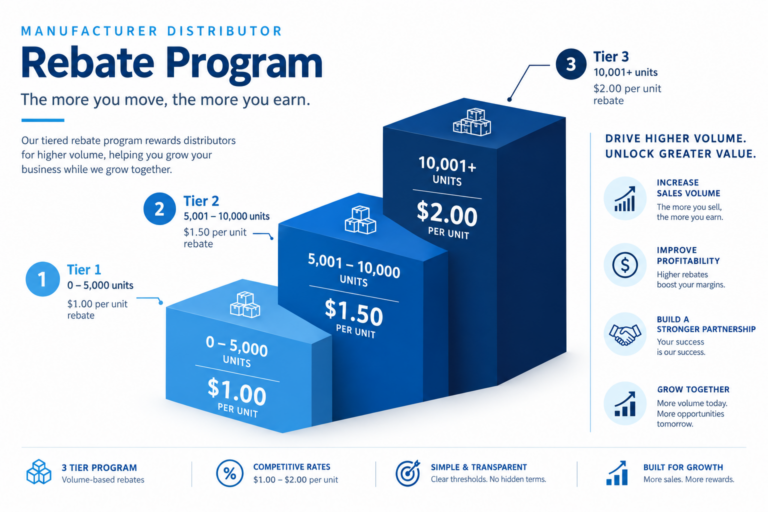
| Tiered Commission | Driving overperformance | Complex tiers require clear thresholds |
| Gross Margin Commission | Protecting profitability | Less intuitive; needs margin transparency |
| Revenue Commission (Flat-Rate) | Standardized products | Simple but doesn’t reward effort beyond volume |
| Draw Against Commission | New hires, long sales cycles | Income bridge but creates repayment risk |
| Residual Commission | Subscription or recurring revenue | Strong retention incentive, complex to track |
| Territory Volume Commission | Collaborative teams sharing geography | Teamwork-first, less individual accountability |
| Multiplier Commission | Multi-KPI or multi-product orgs | Flexible but can be hard for reps to model |
| Performance/Quota-Bonus | Milestone-driven roles | All-or-nothing risk if quota is poorly set |
| Team-Based Commission | Complex, consultative sales | Collaborative but can mask low individual output |
| Promotional Commission | Time-limited product pushes | Urgency-driven but must be clearly communicated |
1. Straight Commission (Commission-Only)
Straight commission, also called commission-only, is the most direct of all commission structures for sales teams: the representative earns a fixed percentage of every sale with no base salary. If they do not sell, they do not earn.
Formula: Commission = Sale Value × Commission Rate
Example: $80,000 deal × 8% = $6,400
When to use it: Straight commission works in environments where sales cycles are short, deals are transactional, and the territory or product gives a skilled rep realistic earning potential without a salary safety net. Real estate brokerages and independent insurance agents use this structure because deal sizes are large enough to sustain the rep through slower periods.
What to watch: Without income security, reps may take shortcuts, over-promise, or cherry-pick high-commission products. Retention is harder because one bad quarter leaves nothing in reserve. This is why most enterprise B2B organizations avoid pure straight-commission models and instead combine a base with commission.
2. Base Salary + Commission
Base salary plus commission is the most common commission structure for sales teams in B2B environments. Representatives receive a guaranteed base salary regardless of performance, plus a variable commission on everything they sell. The fixed component covers living expenses and reduces anxiety; the variable component creates the upside that drives performance.
Formula: Total Comp = Base Salary + (Revenue Closed × Commission Rate)
Example: $65,000 base + ($400,000 × 8%) = $65,000 + $32,000 = $97,000
Pay mix benchmarks: The most common configurations are 50/50 (equal base and variable) and 60/40 (base-heavy). According to industry benchmarks, 50/50 is typical for account executives with 90-180 day sales cycles. Inside sales roles with shorter cycles often run 60/40 or 70/30 — higher base for faster transactional work. We cover how to model the right pay mix in our types of sales incentive structures guide.
When to use it: Base plus commission suits nearly every B2B field sales role with meaningful pipeline development time. It attracts a broader candidate pool than commission-only roles and allows reps to focus on relationship quality rather than purely chasing close velocity.
3. Tiered Commission Structure
A tiered commission structure increases the commission rate as a representative crosses defined performance thresholds. The core idea: reps earn a base rate up to quota, then a higher rate above quota, with each additional tier paying more than the last. This is one of the most effective commission structures for sales teams that want to drive overperformance.
Formula: Commission = (Tier 1 Revenue × Rate 1) + (Tier 2 Revenue × Rate 2) + …
Example: 7% on first $150k, 10% on next $75k, 14% on everything above $225k
According to Level 6 research on commission accelerators, top performers typically earn 1.5x to 2x their standard commission rate once they cross 120% of quota — but this works only when tiers are designed to reward genuine overachievement rather than quota sandbagging. Our full guide to sales compensation thresholds vs. gates explains how retroactive vs. prospective tier resets change rep behavior at the period’s end.
When to use it: Tiered plans work in competitive field sales, SaaS, and enterprise environments where separating high, mid, and low performers matters. The tier breaks themselves serve as psychological milestones that sustain motivation throughout the quarter.
4. Gross Margin Commission
A gross margin commission structure pays representatives a percentage of the profit on each deal rather than a percentage of the total sale price. Revenue is replaced by gross margin (sale price minus cost of goods or delivery cost) as the calculation base. This aligns rep earnings directly with company profitability.
Formula: Commission = (Sale Price − Cost) × Commission Rate
Example: $100,000 deal with $60,000 in costs → $40,000 gross margin × 20% = $8,000
Early sales compensation theory — formalized in Farley’s foundational work reviewed by Harvard Business School — established that commission on gross margin, rather than revenue, provides optimal alignment between the salesperson’s incentive and the firm’s total earnings, especially when reps have pricing control or the product mix includes varied margin profiles.
When to use it: Gross margin plans are the right call for manufacturing, distribution, and professional services environments where reps can negotiate price, cost of goods varies by SKU, or heavy discounting is common. The structure eliminates the incentive to buy revenue at the expense of margin. We detail the calculation approach in our sales commission calculations guide.
5. Revenue Commission (Flat-Rate)
A revenue commission — also called a flat-rate commission — pays a consistent percentage on every dollar of revenue generated, without tiers or margin adjustments. One rate applies to all deals regardless of size, product, or complexity.
Formula: Commission = Total Revenue × Commission Rate
Example: $250,000 monthly revenue × 5% = $12,500
When to use it: Flat-rate commission excels in high-volume, standardized-product environments where deal sizes do not vary significantly — certain SaaS subscription tiers, consumer products, and distribution agreements. The simplicity keeps administrative overhead low and lets reps forecast earnings without complex calculations. The downside is that it provides no differentiation between a rep who closes a $10,000 deal and one who closes a $100,000 deal at the same effort level — unless deal size itself reflects effort, which must be true for this structure to be fair.
6. Draw Against Commission
A draw against commission is a guaranteed advance payment — a “draw” — that representatives receive at the start of a period, which is then reconciled against commissions earned. If commissions earned exceed the draw, the rep keeps the difference. If they fall short, the outcome depends on whether the draw is recoverable or non-recoverable.
Recoverable draw: Shortfalls must be repaid from future commissions. The rep owes the company money if they underperform.
Non-recoverable draw: Shortfalls are forgiven. The company absorbs the loss, making this effectively a temporary income guarantee.
Formula (recoverable): Net Commission = Commission Earned − Draw Advance (carried forward until repaid)
Example: $3,000 draw, $1,800 earned in commissions → $1,200 deficit carried to next period
When to use it: Draws are the standard mechanism for ramping new hires into commission-based roles during the period when pipeline is thin and deals have not yet closed. They are also used in industries like pharmaceutical or enterprise software sales, where deal cycles run 6-18 months and a rep may close nothing in Q1 despite intense activity. The draw bridges income while allowing the company to maintain a variable-pay model.
7. Residual (Recurring) Commission
A residual commission structure pays representatives ongoing commissions on accounts they originally closed, for as long as those accounts continue to generate revenue. The rep earns not just once at the point of sale, but on every renewal, subscription payment, or recurring transaction tied to the relationship they established.
Formula: Monthly Residual = Monthly Account Revenue × Commission Rate
Example: $12,000/month SaaS account × 3% = $360/month in perpetual residual earnings
When to use it: Residual plans are the natural structure for subscription, insurance, managed services, and any business model where the original sale creates an ongoing revenue stream. They powerfully incentivize customer success behavior — a rep who earns residuals on renewals is directly motivated to ensure clients get value from the product. The trade-off is administrative complexity: as rep tenure grows, residual books can become large and require careful tracking through ICM systems to remain accurate.
8. Territory Volume Commission
A territory volume commission structure calculates commission on the total sales generated within a defined geographic or account-based territory, then distributes the commission pool among the representatives covering that territory — often equally regardless of individual contribution.
Formula: Team Commission Pool = Total Territory Revenue × Team Rate → divided equally among reps
Example: $800,000 territory revenue × 5% = $40,000 pool ÷ 4 reps = $10,000 each
When to use it: Territory volume plans suit collaborative selling environments where coverage, presence, and relationship depth across a geography matter more than individual deal attribution. National or regional accounts in manufacturing, wholesale distribution, or retail often use territory volume plans because multiple reps — sometimes covering the same customer from different angles — share responsibility for total territory performance.
9. Multiplier Commission
A multiplier commission structure applies a performance factor — the multiplier — to a base commission rate. The multiplier increases when a rep surpasses key performance benchmarks and can also decrease (acting as a decelerator) when a rep falls below thresholds. This creates a continuously variable payout curve tied to attainment across one or more KPIs.
Formula: Adjusted Commission = Base Commission × Performance Multiplier
Example: $10,000 base commission × 1.3 multiplier (for 115% quota attainment) = $13,000
When to use it: Multiplier plans work in complex organizations where a single performance metric does not tell the full story. A rep might have a base rate of 7%, which multiplies up to 10.5% if they simultaneously hit revenue quota, close a certain percentage of strategic product lines, and maintain customer satisfaction scores. Our guide on commission accelerators covers how multiplier mechanics combine with tiered thresholds to create sophisticated but motivating payout curves.
10. Performance-Based / Quota-Bonus Commission
A quota-bonus commission structure pays a defined bonus when a representative hits a specific attainment milestone — typically 100% of quota — rather than paying a continuous percentage on all revenue. Some plans use a “cliff” structure where no commission is paid below the quota threshold; others blend a lower base rate below quota with an accelerated rate above it.
Formula: Bonus = Flat Payout Amount (at quota attainment milestone)
Example: 0% commission below 80% quota, $8,000 bonus at 100%, $15,000 bonus at 120%
Research from Harvard Business School shows that quota-commission plans approximate the theoretical optimal compensation system with less than 1% non-optimality — making them one of the most practical and theoretically sound approaches available. The combination of a linear commission below quota and an accelerated overachievement rate above it is found by Oyer [2000] to be a uniquely optimal plan in static settings.
We explain how thresholds and gates work within these plans — and how they affect rep behavior near period end — in our detailed breakdown of sales compensation thresholds vs. gates.

11. Team-Based Commission
A team-based commission structure ties compensation to the collective performance of a group rather than individual output. The team earns commission when shared goals are met, which is then divided among members — either equally, by role, or by contribution weighting.
Formula: Individual Share = (Team Revenue × Team Rate) × Individual Contribution Weight
Example: $600,000 team revenue × 5% = $30,000 pool → AE earns 40% = $12,000, SDR earns 25% = $7,500
When to use it: Team-based plans reduce internal competition and promote knowledge sharing in enterprise, healthcare, and technical sales environments where a single rep rarely closes a large deal without support from solutions engineers, account managers, or customer success. The challenge is designing contribution weights fairly enough that high performers feel recognized without carrying peers who underperform. We cover the broader design principles in our guide to sales incentive structure types.
12. Promotional Commission
A promotional commission is a time-limited, elevated commission rate applied to specific products, regions, or deal types to drive a targeted behavior during a defined window. It operates as a bonus layer on top of an existing base commission structure.
Formula: Promotional Payout = Normal Commission + Promotional Bonus Rate (for qualifying deals during promo window)
Example: Standard 6% commission on Product A + promotional 4% bonus = 10% total during Q3 push
When to use it: Promotional commissions serve a specific purpose: moving inventory, accelerating adoption of a new product line, or capturing seasonal demand. A manufacturer launching a new SKU might offer a 3% promotional lift for 90 days to get reps focused on the line before it gets buried in a large catalog. The critical design rule is clarity — the promotional structure must be communicated with precise start/end dates, qualifying products, and calculation examples. Ambiguity here destroys the motivational effect. Our guide to sales performance management platforms covers how to administer time-limited promotions at scale without manual errors.
How to Choose the Right Commission Structure for Your Sales Team
Selecting among commission structures for sales teams comes down to four variables: your sales cycle, your revenue model, your product complexity, and the behaviors you want to incentivize. No single structure is universally optimal.
A foundational framework from Deloitte’s sales compensation research identifies two broad categories: commission-based plans (better suited for high-growth, single-product/market situations with shorter cycles and seller-driven roles) and target-based plans (appropriate for multi-market, multi-product, maturing industries with team-driven roles and longer cycles). Most real-world commission plans for sales teams blend elements of both.
Key decision criteria:
- Sales cycle length: Short cycles (<90 days) tolerate straight or flat-rate commission. Cycles of 90-180 days require a base salary to keep reps financially stable. Cycles over 6 months typically require a draw or guaranteed component.
- Revenue predictability: High-volatility environments call for more base salary (lower incentive risk on the rep). Predictable environments can push toward higher variable pay.
- Margin vs. volume priority: If protecting margin matters, use gross margin commission. If market penetration is the goal, use revenue commission or flat-rate.
- Team structure: Collaborative selling → team-based or territory volume. Independent contribution → individual commission with tiered accelerators.
- Retention goals: Recurring revenue model → residual commission to lock in long-term rep motivation.
For a detailed audit of how well your current plan aligns with these variables, see our guide to choosing a sales performance management platform.
Commission Structure Benchmarks by Industry (2026)
Industry commission rates vary substantially based on margin profiles, deal complexity, and competitive talent markets. The following benchmarks reflect current market ranges across commission structures for sales teams in major verticals:
- SaaS / Technology: 5–20% of ARR or ACV; quota-to-OTE ratio typically 4:1 to 5:1
- Real Estate: 4–6% residential, 4–8% commercial; commission-only is standard
- Manufacturing / Distribution: 7–15%; gross margin commission increasingly common
- Insurance: 5–15% first-year; residual/trailing commissions on renewals
- Financial Services: 0.25–10% depending on product complexity and regulatory environment
- Field Sales / Direct-to-Business: 15–30%; higher rates compensate for commission-only risk
Average quota attainment across industries sits at approximately 74% — meaning roughly a quarter of reps miss quota in any given period. Commission structures that set realistic quotas and include a compensation floor (base salary or draw) sustain motivation better than purely at-risk plans when quota-setting is imperfect, which it almost always is.
The Role of ICM Technology in Running Commission Structures at Scale
Every commission structure for sales teams described above becomes exponentially harder to administer as headcount, product lines, or territory complexity grows. A tiered plan with 50 reps, three product lines, and quarterly resets cannot run accurately on spreadsheets. Errors compound: overpayments erode margin, underpayments erode trust, and disputes consume finance and ops hours that belong elsewhere.
Incentive Compensation Management (ICM) platforms solve this by automating the full commission lifecycle — from plan design and data ingestion through calculation, payout, and earnings-visibility dashboards. Since 2005, we have built and administered ICM programs that drive up to 70% more engagement, 30% faster sales acceleration, and more than 50% improvement in program ROI across dozens of client programs. Learn more about our approach at Level 6 ICM.
Frequently Asked Questions
What is the most common commission structure for sales teams?
Base salary plus commission is the most common commission structure for sales teams in B2B environments. It combines a guaranteed income floor with variable upside, making it attractive for both the company and the representative. A 60/40 or 50/50 pay mix is typical, with the variable component tied to individual revenue or quota attainment.
What is a typical sales commission percentage?
Commission rates vary by industry and structure. SaaS companies typically pay 5–20% of ACV or ARR. Manufacturing and distribution run 7–15%, often on gross margin. Real estate runs 4–6% of transaction value. Field sales with no base salary may see 15–30% to compensate for the income risk. The right rate depends on deal size, margin, and sales cycle length — not on what competitors post publicly.
What is a tiered commission structure in sales?
A tiered commission structure pays representatives a higher commission rate as they cross defined performance milestones. For example: 7% on the first $100,000, 10% on the next $50,000, and 14% above $150,000. Each tier applies only to revenue within that bracket (prospective tiering) or retroactively to all revenue once the threshold is crossed (retroactive tiering). Tiered structures are the most effective tool for driving overperformance in competitive sales teams.
How does draw against commission work?
A draw against commission is an advance payment made to a sales representative at the start of a period. If the rep earns more in commissions than the draw amount, they keep the surplus. If they earn less, the shortfall is carried forward as a deficit to be repaid from future commissions (recoverable draw) or forgiven by the company (non-recoverable draw). Draws are most common during new-hire ramp periods and in industries with long, unpredictable sales cycles.
What is gross margin commission and when should I use it?
Gross margin commission pays representatives a percentage of the profit on each deal — sale price minus cost of goods or service delivery — rather than a percentage of total revenue. Use it when reps have pricing discretion, when heavy discounting is a recurring problem, or when your product mix includes items with widely varying margins. Gross margin commission aligns rep incentives with company profitability rather than just revenue volume.
What is residual commission in sales?
Residual commission pays a representative on every recurring payment from an account they originally closed, for as long as that account remains active. A rep who lands a $15,000/month contract at a 3% residual earns $450/month from that single relationship — ongoing. Residual plans are standard in insurance, subscription software, managed services, and any recurring-revenue business because they directly reward customer retention alongside initial acquisition.
Should commission structures for sales teams be uncapped?
Yes, in most competitive B2B environments. Research from Harvard Business School — drawing on Misra and Nair [2011] — shows that capping commissions consistently demotivates high performers, reducing the incentive to sell beyond the cap threshold. Uncapped structures with well-designed accelerators reward overperformance without a ceiling, retaining your top earners and signaling that exceptional output is genuinely valued.
How often should commission structures for sales teams be updated?
Best practice is to review commission structures for sales teams annually with quarterly monitoring. Annual reviews align compensation design with updated revenue strategy, market conditions, and product priorities. Quarterly monitoring catches attainment drift — if too few or too many reps hit quota — that signals a quota-setting problem rather than a performance problem. Mid-year structural changes should be avoided unless a critical misalignment is documented, as frequent plan changes erode trust and make earnings forecasting impossible for reps.
Final Takeaways
- Structure determines behavior. The 12 commission structures for sales teams each encode a different strategy — for volume, margin, retention, teamwork, or overperformance. Choosing the right model matters more than setting the right rate.
- Base salary + tiered commission is the most versatile combination for B2B sales teams. It provides income security, rewards performance, and drives overachievement through accelerating rates above quota.
- Gross margin commission protects profitability in environments where reps control price or product mix. If heavy discounting is eroding margin, switching from revenue to gross margin commission is the most direct fix.
- Residual and draw structures serve specific lifecycle needs — residuals retain reps in recurring-revenue models; draws protect rep income during new-hire ramp or long-cycle selling environments.
- Uncapped plans outperform capped plans for top performers. Caps signal a ceiling on ambition and consistently demotivate high earners.
- ICM technology is not optional at scale. Accurate, real-time earnings visibility is itself a motivation multiplier — reps who can see what they will earn on every deal sell differently than those who wait for an end-of-month spreadsheet.
Ready to design or modernize a commission structure for your sales team? Explore Level 6 ICM to see how we build custom commission structures that match your exact business rules, automate calculations, and give every rep real-time earnings visibility. Contact us to discuss your program.