By Claudine Raschi, MS · Last updated: April 2026
Quick Answer: What Are the Pros and Cons of Cash vs. Non-Cash Incentives?
Cash vs. non-cash incentives each carry distinct strengths. Cash is flexible, easy to administer, and universally valued — but it merges quickly into everyday spending and rarely builds lasting loyalty. Non-cash incentives create emotional impact, stronger memory association, and higher perceived value, often producing greater performance lift at a lower per-dollar cost. For most programs, a blended approach outperforms either option alone.
Every organization running an incentive program eventually confronts the same question: should we pay out cash, or design something more experiential? The debate over cash vs. non-cash incentives has been studied extensively, and the results are more nuanced than “just give people what they want.”
We work with manufacturers, channel partners, and enterprise sales teams to design incentive programs that actually move behavior. What we see consistently is that the choice between cash incentives and non-cash rewards is not simply a matter of budget — it is a strategic decision that shapes engagement, loyalty, and long-term ROI. Here is what the evidence shows, and how to decide what works for your program.
What Are Cash Incentives?
Cash incentives are direct monetary rewards — bonuses, commissions, profit-sharing, gift cards equivalent to currency, or prepaid debit cards — given to employees, channel partners, or customers for achieving a defined outcome. They are transparent, easy to communicate, and universally convertible: recipients can use the funds however they choose.
Common examples of cash incentive programs include:
- Performance bonuses tied to sales quotas or production targets
- Commission structures that pay a percentage of closed revenue
- Profit-sharing plans that distribute a portion of company earnings
- Spot bonuses awarded immediately after a specific achievement
- Gift card rewards that function as cash equivalents
McKinsey & Company found that companies implementing financial incentives tied directly to specific transformation outcomes achieved nearly a fivefold increase in total shareholder returns compared to those without similar programs — a compelling argument for the power of well-structured cash incentive design.
What Are Non-Cash Incentives?
Non-cash incentives are rewards that carry monetary value but are delivered as something other than money: merchandise, travel experiences, recognition awards, event tickets, wellness perks, professional development opportunities, or points redeemable in a rewards catalog. They are intentionally distinct from compensation — they sit in a different mental category for recipients.
Common examples of non-cash reward programs include:
- Merchandise rewards — electronics, branded goods, lifestyle products
- Incentive travel and group trips
- Experience-based awards — concert tickets, sporting events, dining
- Points-based platforms with a redeemable rewards catalog
- Professional development and training opportunities
- Extra paid time off or flexible scheduling
Research published in the Journal of Management Accounting Research (Choi and Presslee, 2022) identified four attributes that give tangible non-cash incentives a motivational edge over cash: lower fungibility, hedonic nature, novelty, and discrete framing. Each attribute independently increases effort — and together they compound.

How Do Cash and Non-Cash Incentives Differ in Motivation?
The most consistent finding across decades of behavioral research is that cash incentives and non-cash rewards operate through different psychological pathways — and those pathways produce meaningfully different outcomes.
The “Salary Absorption” Problem with Cash
Cash, by its nature, is fungible. It flows directly into an employee’s financial life, indistinguishable from regular pay. Even bonus checks tend to be mentally earmarked for bills, savings, or routine expenses. This “salary absorption” effect means that a $500 performance bonus is forgotten within weeks.
Cash incentives also carry an escalation risk: once employees receive a cash reward, they begin to expect it. If the amount holds flat, motivation erodes. If the amount decreases, it registers as a loss — triggering the very demotivation the program was meant to prevent. Harvard Business School research notes that non-monetary rewards are “often much less expensive for the company” while delivering equivalent or superior motivational impact, because creating meaningful non-cash recognition requires intentionality that a transactional cash payout does not.
Why Non-Cash Rewards Create Stronger Emotional Impact
Non-cash incentives occupy a separate mental category from compensation. They feel celebratory rather than contractual. A landmark study by University of Waterloo professor Scott Jeffrey found that employees incentivized with tangible non-cash rewards outperformed those receiving verbal praise by 38.6%, while cash incentives produced only a 14.6% improvement over the same baseline — meaning non-cash rewards drove more than twice the performance lift of cash.
Interestingly, when Jeffrey interviewed participants after the experiment, two-thirds of the non-cash earners said they would have preferred cash. Yet the group pursuing non-cash rewards significantly outperformed the cash group. This finding captures a core truth: people do not always consciously know what motivates them. Behavioral economics confirms that the emotions tied to a tangible reward overpower the simple utility of currency.
The Discretionary Effort Difference
Non-cash incentive programs are particularly effective at driving discretionary effort — the voluntary contribution above and beyond job requirements. The Incentive Research Foundation has found through multiple studies that programs incorporating experiential and tangible rewards generate approximately 38% greater performance improvement compared to cash-equivalent programs.
This matters most in channel and sales environments, where the “middle tier” of performers holds the most upside. Research by Kelly, Presslee, and Webb (2017), published in The Accounting Review, found that field experiments in consecutive sales tournaments showed non-cash rewards were especially effective at motivating mid-performers — the group most likely to be moved by a well-designed incentive but least responsive to the baseline commissions they already expect.
Pros and Cons of Cash Incentives
Pros of Cash Incentives
Universal appeal and flexibility. Cash works across demographics, life stages, and personal circumstances. There is no risk of offering a reward a participant will not value — every recipient can optimize how they use it.
Easy to administer. Payroll integration, direct deposit, and standard payroll tax reporting make cash incentive programs straightforward to manage. There is no catalog to maintain, no fulfillment logistics, and no participant service calls about redemption.
Clear performance linkage. The dollar value of a cash reward is unmistakable. For programs where the goal is to reinforce a specific measurable behavior — close rate, units sold, safety hours — the direct connection between achievement and payout is transparent and credible.
Effective for financial-priority audiences. During periods of economic pressure, or for populations where financial flexibility is genuinely the primary motivator, cash incentives deliver the highest perceived utility. For some front-line or hourly populations, a cash bonus addresses real, immediate needs that no merchandise reward can match.
Cons of Cash Incentives
Low trophy value and short memory. A deposited bonus leaves no lasting artifact. Employees rarely talk about a cash reward — there is no story to tell, no object to display. Within 30 days, the motivational effect is largely gone.
Entitlement creep. Repeated cash bonuses become expected. Once participants treat a reward as a baseline part of their compensation, the program must continuously escalate to maintain motivational power — an expensive and unsustainable trajectory.
Absorption into routine spending. Cash incentives rarely fund the aspirational purchase a participant has been wanting. They pay for groceries, utilities, or debt — generating no positive memory association with the program sponsor.
Weaker engagement signals. A Harvard Business School analysis notes that in creative, knowledge-based work, financial rewards can actually undermine intrinsic motivation by shifting the employee’s frame from “I’m doing meaningful work” to “I’m doing this for pay” — a phenomenon psychologists call “crowding out.”
Pros and Cons of Non-Cash Incentives
Pros of Non-Cash Incentives
Stronger motivational lift per dollar. The academic evidence consistently shows non-cash rewards outperform cash on effort and performance. Behavioral economists attribute this to hedonic value, novelty, and the “trophy effect” — the reward is visible, shareable, and memorable in a way cash cannot be.
High perceived value relative to cost. A participant who earns a travel experience will describe it as worth far more than its actual cost, especially when shared with family. This perception gap is the reason non-cash incentive programs routinely show better ROI than cash equivalents at the same budget level.
No entitlement creep. Because non-cash rewards are framed as earned, celebratory, and distinct from salary, they maintain novelty across program cycles. A new destination or updated merchandise catalog resets participant interest without requiring a budget increase.
Cultural and brand reinforcement. A well-designed non-cash incentive program tells participants what the organization values. An experiential trip reward signals investment in the whole person; a leadership development award signals a commitment to career growth. These signals build loyalty that no bonus check can replicate.
IRS tax advantages for achievement awards. The IRS Publication 15-B (Employer’s Tax Guide to Fringe Benefits) allows employers to exclude up to $1,600 in qualified non-cash achievement awards from an employee’s taxable wages per year — an advantage that does not apply to cash or cash-equivalent rewards. This means a $1,500 merchandise award costs the recipient nothing in taxes, while the same amount paid as a bonus is subject to income tax, Social Security, and Medicare withholding.
Cons of Non-Cash Incentives
Higher administrative complexity. Points platforms, merchandise catalogs, travel fulfillment, and participant support require operational infrastructure. For small programs, the overhead can outweigh the motivational benefit.
Risk of reward-preference mismatch. A merchandise catalog that does not reflect participants’ actual tastes falls flat. Successful non-cash programs invest in understanding what their specific audience finds aspirational — which requires more upfront design work than issuing a bonus.
Harder to budget for. Unlike a fixed cash payout, merchandise and travel costs can fluctuate. Programs must build in contingency for shipping, currency, event pricing, and participant service — costs that are invisible in a simple cash program.

What Actually Works: Choosing the Right Incentive Model
The honest answer is that the best cash vs. non-cash incentive strategy depends on program purpose, audience, and budget — but research consistently points to a blended model as the highest performer.
When Cash Incentives Work Best
Cash incentive programs are the right choice when the goal is immediate, measurable, short-cycle performance improvement. They excel in:
- Sales acceleration campaigns with defined quarterly targets
- Safety or compliance programs requiring fast behavior change
- Populations where financial pressure is a primary motivator
- Simple, one-time promotions where administrative simplicity matters
When Non-Cash Incentives Work Best
Non-cash reward programs outperform cash when the goal is building long-term engagement, loyalty, and cultural alignment. They are the right choice for:
- Annual or multi-year channel partner incentive programs
- Employee recognition programs designed to reduce turnover
- B2B incentive programs where relationship-building matters alongside revenue
- Programs targeting mid-tier performers with aspirational rewards that cash would not fund
We have seen this dynamic consistently in our work with manufacturers running channel programs. A major industrial components manufacturer ran parallel pilot programs — one offering cash rebates, one offering experiential rewards — across similar dealer populations. The non-cash incentive group showed meaningfully higher engagement rates and sustained their performance lift into the following quarter, while the cash group’s performance reverted to baseline almost immediately after payout.
The Blended Model: Why “Both” Outperforms Either Alone
McKinsey & Company’s research on transformation incentives found that financial incentives combined with nonfinancial incentives generate higher TSR than either approach alone. The logic is straightforward: cash incentives satisfy the rational, near-term motivation to achieve a specific target; non-cash rewards build the emotional connection and aspirational pull that sustain effort over a longer arc.
Best-in-class incentive programs typically use cash or cash-equivalent rewards for threshold performance (baseline compliance or quota attainment) and layer experiential or recognition rewards on top for exceptional performance. This structure communicates a clear value hierarchy: meeting the standard earns financial reward; exceeding it earns recognition and status.
For guidance on structuring a program that blends both elements effectively, explore Level 6’s approach to sales incentive programs and channel incentive programs.
Frequently Asked Questions
Are cash or non-cash incentives more effective for employee motivation?
Research consistently shows that non-cash incentives produce greater performance lift per dollar spent. University of Waterloo research found non-cash rewards drove 38.6% improvement over a praise baseline versus 14.6% for cash — more than twice the performance lift. However, cash is more effective when financial need is the primary motivator or when short-term, measurable goals require immediate reinforcement. The strongest programs combine both.
What is the “trophy effect” in incentive programs?
The trophy effect describes the lasting motivational value of a tangible, visible reward versus cash. A participant who earns a trip, a piece of merchandise, or a recognition award has a story to tell and an artifact to display. Cash gets deposited and forgotten; non-cash rewards create a recurring positive memory associated with the program sponsor. This effect sustains engagement long after the reward is received.
Do non-cash incentives have tax advantages over cash?
Yes, under specific conditions. The IRS Publication 15-B excludes up to $1,600 in qualified non-cash achievement awards (tangible personal property) from an employee’s taxable wages per year. Cash and cash-equivalent rewards — including gift cards — are always taxable regardless of amount. This means a properly structured non-cash incentive program can deliver more after-tax value to participants at the same program cost.
How do I decide between a cash and non-cash incentive program?
Start with your program objective. If you need fast, measurable behavior change in a short window, cash incentives are typically the right lever. If you want to build lasting loyalty, reduce turnover, or motivate the middle tier of a sales or channel population over a longer program cycle, non-cash rewards will outperform. For most enterprise programs, a blended design — cash for threshold performance, experiential rewards for exceptional performance — delivers the highest overall ROI.
Why do employees say they prefer cash but respond better to non-cash rewards?
This is one of the most studied paradoxes in behavioral economics. When asked hypothetically, most people say they prefer cash because its utility is obvious and immediate. But in controlled studies, participants working toward tangible non-cash rewards think about their reward more frequently, report higher commitment, and ultimately perform at higher levels than those working for cash. The emotional pull of an aspirational, visualizable reward outweighs cash’s rational advantage.
What are examples of effective non-cash incentive rewards?
Effective non-cash incentives include incentive travel (individual or group), branded merchandise, electronics, experience packages (sporting events, concerts, dining), professional development, and extra paid time off. The most effective rewards are aspirational — things participants would not typically buy for themselves. A well-curated rewards catalog with meaningful choices for different segments outperforms a generic gift card in both perceived value and motivational impact.
Are non-cash incentive programs more expensive to run than cash programs?
Not necessarily. While non-cash programs require more operational infrastructure, the per-dollar motivational return is typically higher. Research suggests cash rewards cost approximately $0.12 per incremental performance dollar generated, while non-cash rewards cost approximately $0.04 per incremental dollar — making non-cash programs roughly three times more cost-efficient in terms of performance ROI. The IRS tax advantage for non-cash achievement awards further improves the economics.
How do channel incentive programs use cash vs. non-cash rewards?
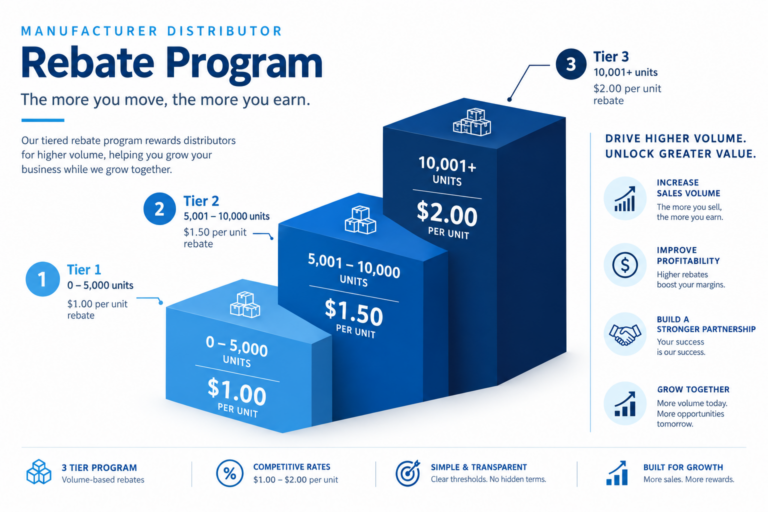
Channel programs — used by manufacturers to motivate distributors, dealers, and resellers — frequently combine both formats. Volume-based cash rebates reward routine purchasing behavior and protect margin. Non-cash rewards like group incentive trips or points programs drive above-baseline performance and build the relationship between the manufacturer and channel partner. The most effective channel incentive programs use cash mechanics for compliance and non-cash recognition for engagement and loyalty.
Final Takeaways
- Cash incentives excel at short-term, measurable performance goals — they are flexible, universally valued, and easy to administer, but they carry entitlement risk and rarely build lasting loyalty.
- Non-cash incentives produce greater performance lift per dollar, create stronger emotional impact, and deliver sustained engagement — especially for mid-tier performers and long-cycle channel or employee programs.
- The IRS allows up to $1,600 in qualified non-cash achievement awards to be excluded from taxable wages annually — a meaningful financial advantage that pure cash incentive programs cannot access.
- Research from the University of Waterloo, The Accounting Review, and McKinsey & Company consistently demonstrates that non-cash rewards generate 2–3x the motivational return of equivalent cash payouts for effort-intensive, discretionary performance.
- A blended incentive program — cash for threshold performance, experiential rewards for exceptional performance — consistently outperforms either model in isolation and delivers the strongest long-term ROI.
Level 6 designs and manages both cash incentive programs and non-cash reward programs for manufacturers, distributors, and enterprise sales teams. Whether you are building a channel incentive program, an employee recognition platform, or a consumer rebate program, we can help you structure the right mix. Contact us to start the conversation.