
By Claudine Raschi, MS · Last updated: April 2026
Quick Answer: How Does the Visa Credit Card Rewards Catalog Work?
The Visa credit card rewards catalog is controlled by the issuing bank — not Visa itself. Cardholders exchange earned points for cash back, travel, gift cards, or merchandise through their bank’s portal. For B2B program administrators, Visa-branded prepaid cards serve as the customizable reward delivery mechanism for channel incentive, rebate, and recognition programs.
The phrase “Visa credit card rewards catalog” means something different depending on who’s asking. For an individual cardholder, it’s the menu of redemption options their bank provides for accumulated points. For a B2B program administrator — a manufacturer, distributor, or brand running a channel incentive or rebate program — it refers to the rewards structure they design using Visa-branded prepaid cards as the payout mechanism.
Understanding both contexts is essential for getting maximum value from Visa-powered rewards, whether you’re managing your own travel points or designing a program that motivates your channel partners. Below we explain exactly how the Visa credit card rewards catalog works, who controls it, what you can redeem, and how businesses build their own catalog experiences using Visa infrastructure.
What Is Visa’s Role in the Rewards Catalog?
Visa is a global payment technology company — it operates the transaction network connecting banks, merchants, and cardholders across more than 200 countries and territories. But Visa is not a bank and does not issue credit cards. This distinction is the foundation of the entire Visa credit card rewards catalog system.
The issuing bank — the financial institution that partners with Visa to put the Visa logo on a card — makes every decision about the rewards program: earning rates, bonus categories, point valuations, redemption options, and catalog contents. Two Visa-branded cards from different banks can have completely different rewards ecosystems.
What Visa does provide universally, regardless of issuer, is a suite of cardholder network protections: zero liability on unauthorized charges, emergency card replacement and cash disbursement, travel and emergency assistance, extended warranty coverage, and purchase security. These are network-level benefits, separate from any issuer-managed Visa credit card rewards catalog.
How Does Earning Work in a Visa Credit Card Rewards Program?
Earning Visa credit card rewards follows a formula set entirely by the issuing bank. Most programs assign a base rate — typically 1 point per dollar — on all eligible purchases, plus elevated rates in defined bonus categories.
Common bonus categories include dining, grocery stores, gas stations, travel bookings, streaming subscriptions, and drugstores. Rates of 2–5 points per dollar are standard in these elevated categories. Co-branded Visa cards — tied to a specific airline, hotel chain, or retailer — concentrate earning power within that partner’s ecosystem.
A critical insight: according to a Bankrate survey, approximately 23% of rewards cardholders did not redeem any rewards in the prior year — leaving substantial earned value unclaimed. Among active redeemers, 61% chose cash back or gift cards as their preferred redemption category.
What Can You Redeem Through a Visa Rewards Catalog?
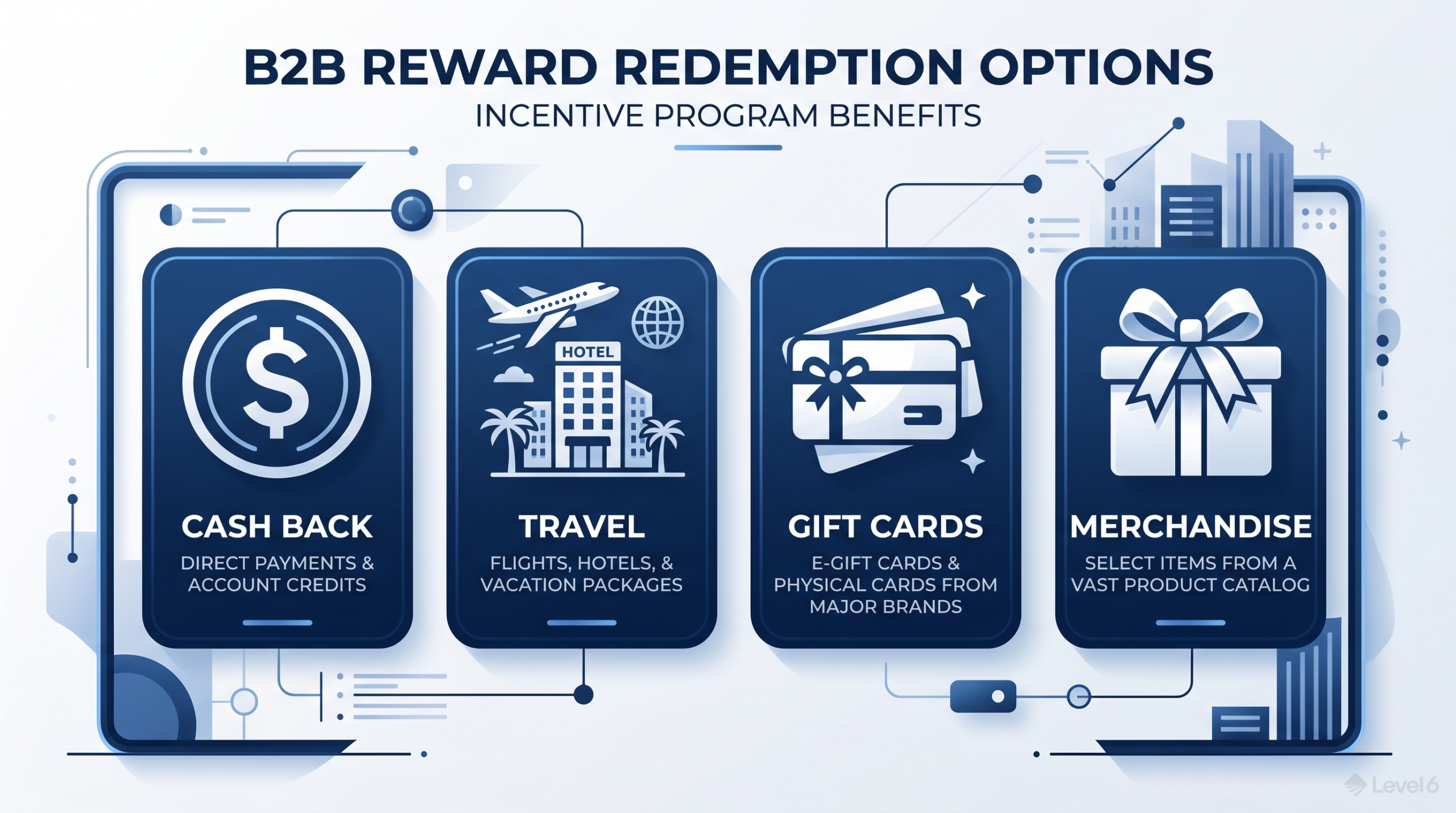
The standard Visa credit card rewards catalog organizes redemption options into four core categories, each designed for a different cardholder preference and offering distinct per-point value.
Cashback and statement credits are the most universally valued option. Earned rewards apply directly against your card balance at a fixed rate — typically one cent per point — requiring no planning, no minimum, and no catalog browsing. Simplicity is the defining advantage. Bankrate reports cash back and gift cards are the most commonly chosen redemption format, selected by 61% of active redeemers.
Travel redemptions — flights, hotels, car rentals, and cruises — offer the highest potential per-point value on premium Visa rewards cards. Booking through an issuer’s dedicated travel portal typically yields 1.25–1.5 cents per point. Transfer partnerships with airline and hotel loyalty programs can unlock two to five cents per point for premium award redemptions. Travel is the category where experienced points managers extract the most value from this catalog.
Gift cards from major national retailers typically redeem at face value (one cent per point) with periodic promotional events offering a 10–20% bonus on selected brands. They provide a middle ground between the universality of cash and the specificity of merchandise.
Merchandise and experiences — electronics, home appliances, luxury goods, event tickets, and charitable donations — round out most rewards catalogs. Per-point value here often runs at or below the one-cent floor, but the aspirational pull of specific items creates strong motivational appeal in structured incentive programs.
Who Actually Controls a Visa Credit Card Rewards Catalog?
The issuing bank controls every aspect of the Visa credit card rewards catalog: what participants can earn, what they can redeem, how much each point is worth, when points expire, and how the catalog interface works. Visa sets network standards and cardholder protections — but the rewards program itself is entirely the issuer’s design and financial responsibility.
This is why comparing two Visa cards requires looking beyond the Visa logo. A Visa credit card rewards catalog at one bank may offer 5,000 merchandise SKUs, hotel transfer partners, and a dedicated concierge; another may offer only statement credits and a handful of gift card brands. Same network, completely different programs.
For businesses running corporate incentive or rebate programs, this issuer-control model becomes a design opportunity. When a company deploys Visa prepaid incentive cards as the payout mechanism for their program, they are effectively the “issuer” for their participants — controlling the denominations, branding, delivery format, and earning trigger structure.
How Do Businesses Use the Visa Credit Card Rewards Catalog in Incentive Programs?
For manufacturers, distributors, and B2B program administrators, the Visa credit card rewards catalog concept takes a different form than a consumer bank portal. Rather than managing a cardholder’s personal points, they design a curated rewards experience for participants — sales reps, channel partners, dealers, or end customers — and fund it with Visa-branded prepaid cards.
According to Visa’s official incentives program, the Visa Incentives prepaid card is specifically designed for companies distributing rewards to employees, resellers, customers, and vendors — offering more flexibility and convenience than cash or checks, and accepted everywhere Visa cards are accepted worldwide.
Program administrators typically structure the Visa credit card rewards catalog experience for participants in two ways:
- Points-to-Visa-card redemption: Participants earn points through defined behaviors — sales milestones, training completions, volume thresholds, or rebate submissions — and redeem those points for a Visa prepaid card in a dollar amount proportional to their point total. The card then functions as open-ended spending currency at any Visa-accepting merchant.
- Direct Visa prepaid card issuance: The company issues a fixed-value or variable-value Visa prepaid incentive card directly upon a qualifying event, bypassing a points accumulation step entirely. This format is dominant in consumer rebate programs and spot recognition awards.
Research from Deloitte’s 2025 Consumer Loyalty Program Survey confirms that 86% of consumers rate financial rewards and simplicity as the most important loyalty program attributes — the exact combination that makes Visa prepaid cards the dominant format in B2B incentive programs.
We help program administrators design and administer these programs through our custom prepaid branded debit card solutions. Cards can carry your company logo, be issued in preset or variable denominations, and be delivered physically or virtually based on program requirements.
What Are the Types of Visa Cards Used in Incentive Programs?
Three Visa card formats serve the incentive program ecosystem. Matching the card type to the program structure is a critical design decision.
One-time prepaid Visa incentive cards are pre-loaded with a fixed dollar amount by the program sponsor and distributed to participants upon qualifying events — rebate submissions, sales milestones, recognition awards, or training completions. They require no credit check, carry no liability risk, and are accepted wherever Visa debit is accepted. They are the go-to format for consumer rebate programs and single-event B2B rewards because of their administrative simplicity.
Reloadable branded Visa debit cards function as ongoing reward accounts that program sponsors fund over time as participants earn new rewards. These cards stay with participants across multiple program cycles, generating sustained brand impressions with every transaction. For ongoing sales incentive programs with monthly or quarterly payout cadences, reloadable cards create stronger long-term brand association. Our guide comparing reloadable and prepaid debit cards walks through when each format delivers more value.
Virtual Visa debit cards are delivered entirely digitally — via email or SMS — typically within minutes of issuance. They are usable immediately for any online or phone purchase that accepts Visa debit. For programs targeting geographically dispersed partners or participants who prefer digital-first experiences, virtual delivery eliminates the 5–10 day wait for physical card mail. See our full comparison of virtual vs. physical prepaid cards for a complete breakdown.
How Do You Maximize Value from a Visa rewards catalog?
Getting maximum value from any Visa rewards program requires a deliberate strategy, whether you’re a cardholder or a program administrator.
For individual cardholders, the core moves are: concentrating spending in the card’s highest-earning bonus categories, activating sign-up bonuses by hitting the minimum spend requirement, redeeming for travel when per-point value exceeds 1.5 cents, and checking point balances at least annually to prevent expiration. The 23% of cardholders who never redeem (Bankrate) are effectively giving away the rewards their spending earned.
For program administrators, maximizing the Visa rewards catalog design means aligning card denominations with achievement levels, matching card format (prepaid vs. reloadable vs. virtual) to program cadence, branding cards for sustained awareness, and offering participants flexibility between physical and virtual delivery. McKinsey & Company research shows paid loyalty program members are 60% more likely to increase spending after joining — a metric that applies directly to B2B channel programs where Visa prepaid rewards anchor partner behavior change.
Our sales incentive programs integrate all of these design layers, with managed submission verification, real-time dashboards, participant support, and 1099 tax compliance included.

Visa Prepaid Cards vs. Traditional Merchandise Catalogs: Which Is Right for Your Program?
Program administrators frequently face a core design choice: build a merchandise rewards catalog, or use Visa prepaid cards as direct payouts? Merchandise catalogs create goal-directed motivation — participants work toward a specific item, sustaining engagement over long program cycles. Catalogs also allow tier differentiation, with higher earners accessing premium catalog sections.
Visa prepaid cards eliminate all redemption friction. A $500 Visa prepaid card is universally understood and immediately usable anywhere; a $500 catalog credit requires participants to find an in-stock item that matches their preferences. This universality drives higher participant satisfaction and prevents the disengagement that results from unspent points or unappealing catalog options.
Many high-performing programs offer both: a points-based system where lower-value redemptions access merchandise and gift cards, with top-tier redemptions delivering a Visa prepaid incentive card. This hybrid structure satisfies both aspiration-driven and flexibility-driven participants. Our channel incentive program guide covers how to structure this hybrid approach effectively.
Frequently Asked Questions
What is the Visa credit card rewards catalog?
The Visa credit card rewards catalog is the structured menu of redemption options — cash back, travel, gift cards, and merchandise — made available by a cardholder’s issuing bank. In B2B contexts, it refers to the reward structure a program administrator builds using Visa-branded prepaid cards as the delivery mechanism. Visa itself provides the payment network infrastructure but does not create or fund any catalog.
Does Visa itself offer rewards points or control the catalog?
No. Visa operates the payment network — it does not issue cards, set rewards rates, or build the Visa rewards catalog. Every earning rate, redemption option, and point valuation is determined exclusively by the issuing bank or, for corporate incentive programs, the program administrator. Two cards with the same Visa logo can have entirely different rewards structures.
How do I access my Visa credit card rewards catalog?
Log in to your issuing bank’s online banking portal or mobile app and navigate to the “Rewards” or “Points” section. Most banks also maintain a dedicated rewards website. Redemption by phone is available at the number on the back of your card. For corporate incentive programs, participants access the Visa rewards catalog through the program-specific portal managed by the program administrator.
Do Visa rewards points expire?
Expiration policies vary by issuing bank. Some Visa rewards programs expire points after 24–36 months of account inactivity; others never expire as long as the account remains open. Check your cardmember agreement or call your bank to confirm your specific expiration policy. Redeeming annually is the safest approach to avoid forfeiting earned value.
What is a Visa prepaid incentive card and how is it different from a Visa credit card?
A Visa credit card extends a revolving credit line from a bank and may include an issuer-run rewards program. A Visa prepaid incentive card is pre-funded by a program sponsor with a specific dollar value and distributed as a reward — no credit check required, no revolving balance, no bank relationship. Prepaid cards are the standard reward delivery vehicle for B2B channel incentive, rebate, and employee recognition programs because they combine universal Visa acceptance with the clarity of a fixed cash value.
How do businesses set up Visa prepaid cards as their rewards payout?
Businesses partner with an incentive program provider — such as Level 6 — to source custom branded Visa prepaid incentive cards, define the earning triggers and denominations, and administer delivery, participant support, and tax compliance. Cards can be physical or virtual, pre-denominated or variable-value, and branded with the company’s logo and program name. The entire setup can be operational in as little as three to four weeks.
Can Visa prepaid incentive cards be branded with a company logo?
Yes. Branded Visa prepaid incentive cards carry your company logo, colors, and custom messaging. Every time a participant uses the card, they see your brand — extending marketing value well beyond the initial reward event. Branding is available on both physical and virtual card formats, and bulk orders typically unlock volume pricing that keeps per-card cost competitive with checks or ACH transfers.
Should a channel incentive program use Visa prepaid cards or a merchandise catalog?
Most high-performing channel incentive programs use both. A points-based system with a merchandise catalog creates aspirational motivation across the program cycle; adding Visa prepaid cards as a top-tier redemption option satisfies participants who prefer cash flexibility. The hybrid approach consistently outperforms single-format programs on sustained partner engagement and repeat participation rates.
Final Takeaways
- Visa is the network; your bank or program administrator is the catalog architect. Every Visa rewards catalog is built and controlled by the issuing bank or program sponsor — not by Visa itself.
- Four redemption categories define most consumer catalogs: cashback, travel, gift cards, and merchandise. Travel typically delivers the highest per-point value; cashback offers the most immediate utility with the least friction.
- Visa prepaid cards are the dominant B2B incentive payout. For channel incentive, rebate, and recognition programs, they combine universal Visa acceptance with predictable dollar-value delivery — meeting Deloitte’s finding that 86% of consumers prioritize financial rewards and simplicity above all other program attributes.
- 23% of cardholders leave points unredeemed annually (Bankrate). For program administrators, this statistic is a design signal: reduce catalog friction, simplify redemption, and communicate point balances proactively to prevent participant disengagement.
- The hybrid catalog approach wins in B2B. Programs that combine aspirational merchandise tiers with top-level Visa prepaid card payouts consistently outperform single-format programs on sustained engagement and repeat participation.
Ready to design a Visa rewards catalog experience that drives measurable performance for your channel partners, sales team, or customers? Contact Level 6 to explore custom Visa prepaid card solutions, points-based rewards platforms, and fully managed incentive programs built for manufacturers, OEMs, and B2B brands.