
Prize registration deadlines, state tax withholding rates, gift card escheatment laws and wage classification laws are all handled differently from state to state – and a rewards program that was built around just one of them can run into legal liability the second that it crosses a border.
A mistake I see time and again is the assumption that federal law sets the baseline and state laws are just minor add-ons that are layered on top. States like New York, Florida and Rhode Island have their own strict filing and bonding requirements that sit well outside of federal oversight. Miss a state deadline by even a week, and the program could be looking at a forced shutdown or financial penalties before a single reward ever gets to a participant.
States have a variety of different laws on this, depending on where you live, and they can look pretty different in each category. Prize registration requirements, tax withholding thresholds and gift card compliance laws all work a little differently from one state to the next. A rewards program that runs just fine in one state may still need some adjustments before it can legally run in another.
A multi-state program that’s set up correctly from day one earns trust from its participants, puts the company well away from regulatory problems and won’t need to be overhauled every time it grows into a new state. The early investment in compliance work tends to pay for itself over and over again – and every new state added to the program is a natural step forward instead of a scramble.
Here is how to successfully run your incentive programs across multiple states!
Why State Laws Are Not All the Same
Incentive programs in the United States don’t fall under one single federal law – and they never have. Every state gets to write its own set of laws, and they can look dramatically different depending on where you are.
Those differences have consequences. Prize taxation, gift card laws and wage standards for employees who earn rewards through a program – these get decided at the state level. A program that’s compliant in one state might run into problems in another, just because the two states never agreed on how to treat it.

One of the first questions worth sitting with early on is how many states your program needs to cover. Your customers could be in one region, your employees in another, and your day-to-day operations spread across a few more on top of that. Add that up, and you start to get a picture of your program’s footprint – and for multi-state businesses, that number can get pretty large and pretty fast.
The more states your program covers, the more factors that you have to account for. The standards themselves aren’t impossible to follow (and one of my favorite parts to work through with clients), but they don’t all point in the same direction, and the gaps between them can have an effect on how you structure the whole program.
Something that looks pretty minor on its own can become a compliance headache once you’re running that same program across a dozen states at once. Taxes, prizes, gift cards and wage standards are the four areas where state-by-state differences are going to matter most for your program.
States Have Different Sweepstakes Rules
A single-state sweepstakes is pretty manageable on its own. Go national, and you’re facing a whole web of filing deadlines and registration conditions – and each one is different based on where your participants live.
New York, Florida and Rhode Island all have laws that activate once your prize pool crosses a set dollar threshold. The regulation to know about in New York is General Business Law §369-e, which means sponsors need to register the sweepstakes and post a bond before the promotion can go live – and the bond has to cover the full value of every prize available.
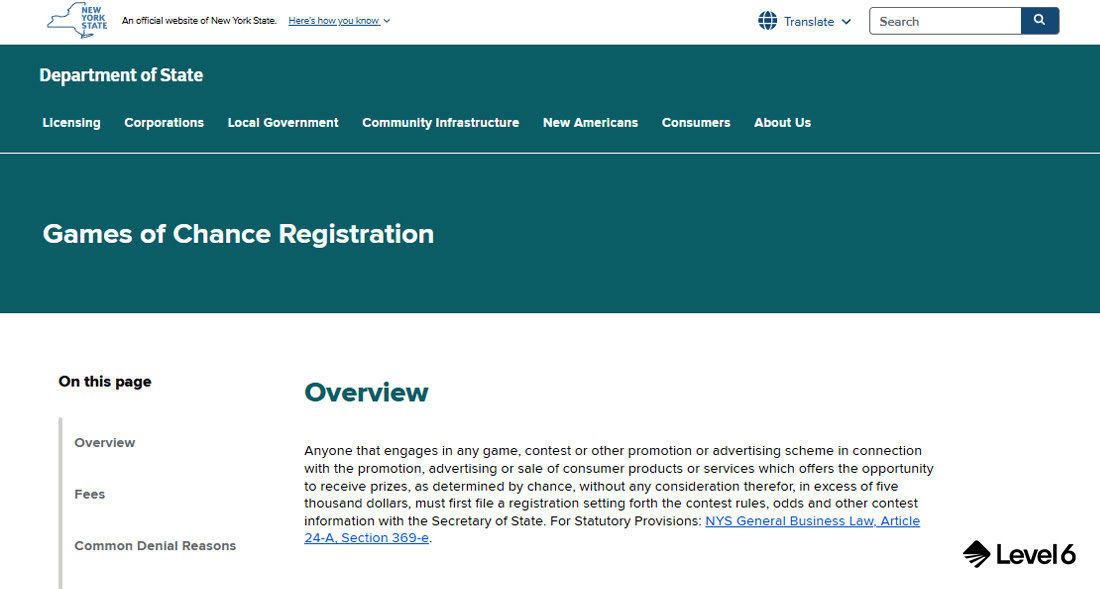
Florida and Rhode Island work just about the same way, and each state wants sponsors to register and post a bond before a promotion goes live. But each one draws its own line for when those conditions kick in. Those lines don’t land in the same place, though – a promotion that sits within Florida’s limit could still cross the threshold over in Rhode Island.
Get this wrong and the consequences are not minor. A state can hit you with fines or force you to pull the promotion down altogether mid-campaign. A winner announcement that’s already gone public is pretty hard to walk back.
The harder part is that these deadlines almost never line up in any convenient way. A sponsor could be deep in paperwork for one state, with approval still pending from another, and an original launch date still hanging in the balance. The sponsors who manage multi-state promotions best are the ones who map out each state’s registration window right at the start of the planning process – not two weeks before the promotion goes live. An early start on the calendar is the only reliable way to hold everything together without a last-minute scramble.
Why Tax Rules Are Different From State to State
Federal tax laws are a starting point. At the federal level, any prize or incentive payout over $600 calls for a 1099 form – and most program managers will already have this piece taken care of.
State-level taxes are where it starts to get a bit more involved. On top of everything that the federal government wants from you, each state has separate income tax laws – and they can vary quite a bit from one to the next. A small number of states don’t have any income tax at all, which makes life considerably easier for winners who live there.
Federal 1099s are only one part of this. A company can get its federal filings right and still fall short on state-level reporting. State tax laws aren’t always easy to find.

A winner’s home state is usually what decides which state tax laws apply to their payout – and for a program that runs across dozens of states, that one detail starts to matter. Tax laws in one state can be quite different from those in another, so a single blanket plan for compliance just won’t work.
A tax advisor with genuine multi-state reporting experience is well worth the investment. State tax agencies do audit incentive programs, and the documentation that they ask for can get pretty involved. I’ve seen programs pass federal compliance without a single issue and still face problems at the state level just because the reporting wasn’t correctly locked down across every jurisdiction.
The Gift Card Dormancy Laws to Know
Gift cards and stored-value rewards carry a lot of legal responsibility. Nearly every state has unclaimed property laws on the books, and a large portion of the laws apply directly to unused gift card balances.
Some states give you five years before they want that money back, and others will come for it much sooner than that. A multi-state program means a few different deadlines to track, and each one has its own paperwork and reporting process.

Delaware is probably the most talked-about example of how aggressively a state can go after this. Big retailers have been audited there and forced to hand over pretty large amounts of their unclaimed gift card balances. The reason Delaware comes up in these conversations is that a very large number of U.S. businesses are incorporated there. That alone can give the state a legal claim to any unclaimed property – even when the customer lives in a whole different state.
Some businesses record gift card sales as revenue the second a card goes out the door – it’s a pretty natural way to look at it. But this doesn’t account for what the law will expect later. From a compliance standpoint, two details need to be locked down – a record of each card’s running balance and a sense of when each state’s dormancy clock starts. Expanding a gift card program across multiple states makes it well worth the time to bring in a legal or compliance professional – specifically one who works in unclaimed property law.
States That Treat Your Bonus as a Wage
Quite a few states treat bonuses and incentive payouts just like a normal paycheck – and that comes with legal weight. Those payments carry the same protections as wages, with terms around how and when that money has to reach you.
California is one of the stricter states on this. A bonus that’s linked to work that a person has already performed can get treated as earned wages under California law – not as a gift or a discretionary reward. New York tends to land in the same camp in most cases. Those states also have timing laws around when those payouts have to happen. Any bonus program operating in either state needs to be built with that in mind.

One thing that tends to get missed – if an employee earns a reward through a sales contest or hits a performance milestone, quite a few states will treat that as wages owed to them. Missing the payment window or quietly adjusting the terms after the fact could easily land a wage-and-hour claim on your desk.
Your program structure deserves a hard look. Ask yourself if the participants are earning their rewards through actual work activity and if those rewards could realistically be interpreted as wages or compensation. The language in your program terms matters just as much as the structure itself – maybe even more. A reward described as ” contingent on performance” reads very differently to an auditor than one framed as a discretionary bonus.
Multi-state programs run into problems when they apply one payout structure to every participant, no matter where that person works. A policy that’s perfectly fine in one state can create genuine legal exposure in another. Any program covering sales teams or employees across California, New York or any state with comparable wage protections deserves your attention – nail down how each state defines earned wages before your next campaign goes live.
Build a Program That Works in Every State
The legal side is only half of it. A program that checks every compliance box but can’t be run in the real world isn’t doing much for anyone.
The smartest move here is to build your entire program around the strictest state’s standards from day one. If your reward structure can hold up in the most restrictive state, it’ll hold up just about everywhere else, too. There’s no need to create separate versions of the same program for different markets, and no need to check which standards apply in which state. A single clean framework takes care of it all. The more variation you add to a program, the harder it gets to manage – and compliance problems can pile up fast with different prize values, different terms and different thresholds to track across multiple states.

When the time comes to set up your reward structure (prize values, tax reporting thresholds, gift card terms, everything), your most restrictive state should be the anchor point that you build everything else around. Work your way outward from there. A program that starts tight can always be loosened up. A program that starts loose is a much harder fix – compliance corrections after the fact are painful and expensive.
Documentation deserves real attention at the design stage. You should have a record of why your reward values are set the way they are and write out your reasoning behind the final program terms. If your program ever gets audited or called into question, that documentation will matter quite a bit. A strong paper trail is one of the best ways to show that your decisions were deliberate and well thought out.
Level Up Your Incentives and Rewards
Multi-state incentive programs are a handful to manage – and in some ways, that’s sort of the point. The businesses that manage this right (the prize filings, tax reporting, gift card timelines, wage laws, program structure and the standard check-ins) are the ones that can grow without it all falling apart.
None of this takes a law degree or a dedicated compliance team. What it does take is a picture of what you’re working with and the foresight to build your program around that from day one.
Every topic that we walked through has a workable answer behind it – design your promotions around your most restrictive state, match your tax obligations to wherever your winners live, stay ahead of your gift card dormancy timelines before they turn into a problem and set aside time to revisit everything as the laws continue to change. A manageable plan is easy.

A well-structured program is much easier to pull off with a team that has done it before. At Level 6, we build incentive programs that are actually designed to get results – solutions like branded debit cards, employee rewards and recognition programs and custom sales incentive programs that are built around your business. Every program that we put together is focused on measurable results, and we’d love to show you what that looks like for your team.
Get in touch with us for a free demo and see how we help high-performance businesses get the most out of their incentive programs.