By Claudine Raschi, MS · Last updated: April 2026
Quick Answer: What Are the Benefits of Prepaid Debit Cards for Business Travel?
Prepaid debit cards for business give finance teams predefined spending limits per traveler, real-time transaction visibility, and automatic digital records — all without linking to a corporate bank account. They eliminate expense reports, reduce fraud risk, and are accepted worldwide.
Business travel is recovering strongly. According to Deloitte’s 2024 Corporate Travel Study, corporate travel spend is projected to grow 8% to 12% in 2024, with 73% of travel managers expecting their company’s spend to increase. That growth is welcome — but it also puts renewed pressure on finance teams to control costs, prevent misuse, and maintain documentation that satisfies IRS requirements.
Prepaid debit cards for business travel address all three challenges at once. They cap spending before a trip begins, record every transaction digitally in real time, and keep company funds segregated from employees’ personal bank accounts. In our experience working with manufacturers, distributors, and B2B channel partners, these cards solve practical problems that traditional corporate credit cards and reimbursement workflows simply cannot.
Below we explain how prepaid business debit cards work, the specific advantages they offer road warriors and their finance teams, and practical tips for implementing a prepaid debit card program effectively.
How Do Prepaid Debit Cards for Business Work?
A prepaid debit card for business is loaded with a fixed amount of company funds before use. The cardholder spends from that preloaded balance — and nothing more. Unlike a corporate credit card, there is no line of credit, no end-of-month statement surprise, and no connection to the company’s primary bank account.
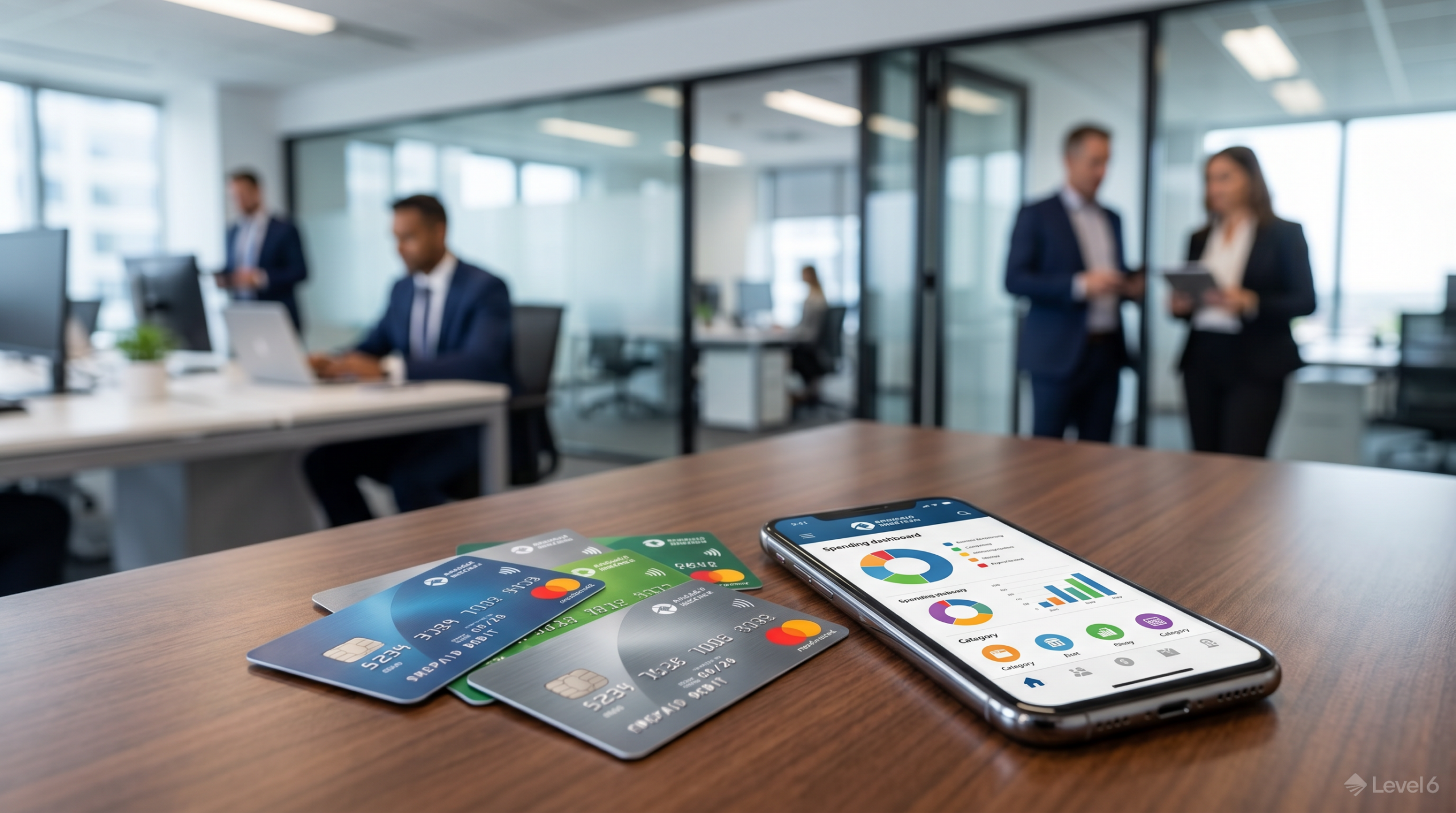
Finance administrators manage the cards through an online dashboard. They can load funds, set per-transaction limits, restrict spending by merchant category codes (MCCs), and monitor transactions in real time. When a traveler makes a purchase, the charge is authorized against the card balance, and both the administrator and the cardholder can see the transaction immediately — no waiting for a billing cycle to close.
Many programs also support mobile receipt capture, so employees photograph receipts on the spot and attach them to transactions directly in the app. This eliminates the end-of-trip receipt-sorting that frustrates employees and consumes finance team hours. The result is a closed-loop expense management system built around accountability rather than trust.
Why Businesses Are Adopting Prepaid Cards for Travel
The traditional reimbursement model requires employees to use personal funds, collect physical receipts, submit expense reports, and wait for payment — a cycle that creates friction for employees and reconciliation headaches for accounting. Prepaid debit cards for business remove every step in that cycle by issuing company funds upfront and recording expenditures automatically.
The case for switching is quantitative. Expense reimbursement fraud appeared in 13% of all occupational fraud cases studied in the Association of Certified Fraud Examiners (ACFE) 2024 Report to the Nations, with a median loss of $50,000 per case and a typical duration of 18 months before detection. Overall, the ACFE estimates that organizations lose approximately 5% of annual revenue to fraud — with expense misuse as a consistent contributor. Prepaid cards address this at the source by preventing unauthorized spending before it happens, not after.
For companies managing large travel budgets across sales teams, channel partner visits, and customer-facing road shows, that kind of proactive control can translate into meaningful savings at scale.
Key Benefits of Prepaid Debit Cards for Business Travel
Predefined Spending Limits Prevent Overruns
The most fundamental advantage of a prepaid business debit card is that employees can spend only what has been loaded onto the card. Finance teams set the budget for each trip in advance — broken down by per diem allowances, hotel limits, ground transportation caps, and meal categories — and the card enforces those limits automatically. There are no surprise charges, no retroactive reconciliation arguments, and no overspending that quietly accumulates across a team of 20 road warriors.
Administrators can also configure merchant category code (MCC) restrictions to ensure cards only work at approved vendor types. A card issued for a sales trip, for example, can be restricted to airlines, hotels, restaurants, and ground transportation — blocking entertainment venues or non-business retailers automatically. This eliminates the ambiguous expense report entries that drain finance teams’ time.
Real-Time Visibility Into Every Transaction
With traditional corporate cards, finance teams see spending after the billing cycle closes — often 30 or more days after a trip has concluded. With prepaid debit cards for business travel, every transaction appears on the administrative dashboard the moment it is authorized. Managers can see who spent what, where, and when — in real time.
This live visibility transforms expense management from a reactive audit process into a proactive oversight function. Finance teams can flag anomalies immediately, adjust card balances mid-trip when legitimate needs arise, and generate expense reports automatically without waiting for employees to submit documentation. For companies managing dozens of simultaneous business travelers, this kind of real-time control is operationally significant.
Security Advantages Over Corporate and Personal Cards
When a corporate credit card is lost or stolen, the exposure includes the entire credit limit — potentially tens of thousands of dollars, plus the risk of account compromise. When a personal debit card is lost, a thief may access the employee’s bank account before the bank can intervene. A prepaid debit card for business travel limits exposure to whatever balance remains on the card. Visa- and Mastercard-branded prepaid cards also carry Zero Liability protection, meaning cardholders are not responsible for unauthorized transactions when the card is registered and the loss is reported promptly.
If a card is lost during travel, the administrator can freeze it instantly from the management dashboard — without affecting any other company cards or accounts. This containment is especially valuable for employees traveling internationally, where card theft is more difficult to detect and report quickly. The card carries no sensitive bank account data, no credit line, and no personally identifiable financial information beyond what is loaded onto it.
Simplified IRS Documentation and Compliance
The IRS requires that business travel expenses be ordinary, necessary, and properly substantiated — meaning receipts, documentation of business purpose, and timely recordkeeping. Under an accountable plan, reimbursements must be submitted within a reasonable timeframe (typically 60 days) to remain tax-free to the employee.
Prepaid debit cards for business support this compliance requirement automatically. Every transaction generates a digital record: date, merchant, amount, and location. When mobile receipt capture is enabled, employees attach supporting documentation at the point of purchase. Finance teams export clean, categorized transaction data directly into accounting systems — eliminating the manual data entry that introduces errors and the receipt gaps that complicate tax filings. According to IRS Publication 463, well-organized records are the foundation of any defensible travel expense deduction, and prepaid card programs provide exactly that structure.
Elimination of the Reimbursement Cycle
The reimbursement model is slow, error-prone, and deeply unpopular with employees. Workers are expected to float company expenses on personal cards or cash, track receipts under the stress of active business travel, and submit reports that may take weeks to process.
This arrangement particularly disadvantages younger employees and those in roles with lower base salaries — creating unnecessary friction that affects morale and retention. Prepaid business debit cards eliminate this friction entirely: employees spend company money for company purposes, and the documentation happens automatically.
There is no out-of-pocket expense, no receipt pile, and no reimbursement wait. Finance teams save the administrative time previously consumed by expense report review, approval workflows, and reimbursement processing — time that is better spent on strategic financial analysis.
International Travel Made Simpler
Business travel often crosses borders, which introduces currency exchange complexity, foreign transaction fees, and the security risk of carrying significant cash. Visa- and Mastercard-branded prepaid debit cards for international business travel are accepted at virtually every major hotel, restaurant, airline, and merchant worldwide. Administrators can load foreign currency equivalents, and employees pay in local currency without worrying about exchange rate timing or fee structures.
If a card is lost internationally, the administrator freezes it remotely — a far simpler process than attempting to cancel a bank-linked debit card or corporate credit card from overseas. For companies managing global sales teams or channel development representatives traveling across multiple regions, prepaid cards dramatically reduce the logistical complexity of international expense management.

Branded Prepaid Debit Cards: A Dual-Purpose Tool
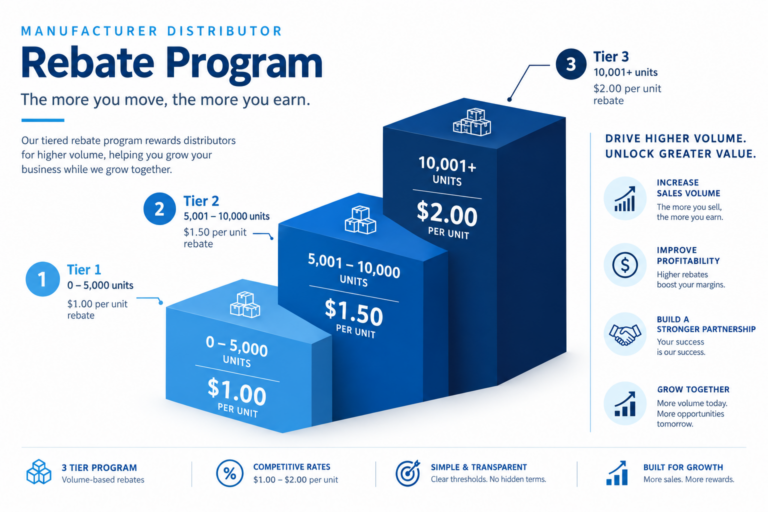
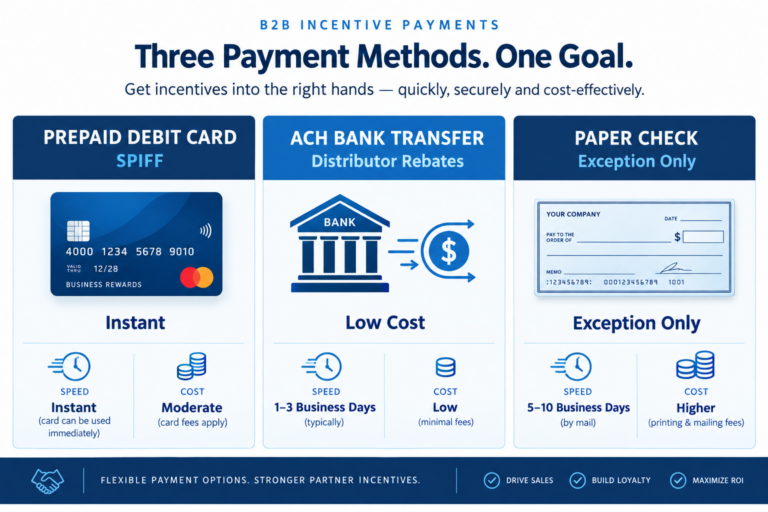
Beyond expense management, prepaid debit cards for business serve an important secondary function in B2B incentive and rewards programs. Level 6 designs and administers branded prepaid debit cards that companies use as the reward delivery mechanism for channel partner incentives, consumer rebates, employee recognition, and sales performance programs. Our rebate programs frequently use branded prepaid cards as the fulfillment mechanism because they deliver both financial value and brand reinforcement in a single instrument.
A branded debit card bearing a manufacturer’s or distributor’s logo reinforces brand identity every time the recipient uses it. Unlike a generic check or ACH transfer, a physical card creates a tangible, memorable reward experience. Recipients can use the card at any merchant that accepts Visa or Mastercard — giving them the flexibility of cash without the anonymity. For companies running rebate programs or dealer incentive campaigns, branded prepaid cards deliver both functional value and brand reinforcement in a single instrument.
We also offer reloadable branded debit cards for programs that disburse rewards over time — such as ongoing channel partner performance programs or employee recognition programs with quarterly payouts. A single card can receive multiple loads, reducing fulfillment costs and keeping the brand consistently in the recipient’s wallet.
Practical Tips for Implementing a Business Prepaid Debit Card Program
The benefits of prepaid debit cards for business travel are only realized when the program is implemented with clear policies and consistent administration. The following practices reflect what works in programs we manage for B2B companies across manufacturing, distribution, and channel sales organizations.
Establish clear spending policies before issuing cards
Define approved expense categories, daily limits, and prohibited uses in a written cardholder policy before the first card is issued. Spell out which merchant categories are approved, what documentation is required, and what constitutes a policy violation. A signed acknowledgment from each cardholder creates accountability and prevents later disputes.
Use MCC restrictions aligned with trip type
Configure merchant category code restrictions for each card based on the specific trip purpose. A card issued for a trade show should authorize hotels, restaurants, airlines, and ground transportation — but not general retail or entertainment. MCC restrictions are the most effective proactive fraud control available in a prepaid program, and they take seconds to configure in a well-designed management dashboard.
Set trip-specific balances, not blanket amounts
Load each card with the budgeted amount for the specific trip rather than a standard monthly allowance. This approach creates clearer accountability, simplifies per-trip reconciliation, and prevents unused balances from accumulating. Cards can be reloaded mid-trip if legitimate unexpected expenses arise — and the decision to reload is made consciously, with visibility into what has already been spent.
Monitor transactions weekly during active travel periods
Real-time visibility is only valuable if someone is actually looking at it. Assign a specific finance team member to review the transaction dashboard on a regular cadence during heavy travel periods — weekly at minimum, daily during major company events or sales conferences. Anomaly detection is far more effective when it happens within days of a transaction, not during a quarterly audit.
Integrate with your accounting system
Most modern prepaid business debit card platforms export transaction data in formats compatible with major accounting software (QuickBooks, NetSuite, SAP). Setting up this integration on day one eliminates the manual data entry burden that makes expense management time-consuming. Transactions flow into the ledger automatically, categorized according to your chart of accounts, and the month-end close process becomes a review rather than a data-collection exercise.
Prepaid Debit Cards vs. Corporate Credit Cards for Business Travel
The choice between a prepaid debit card for business and a corporate credit card depends on the specific use case, the size of the travel program, and the level of control required. The table below summarizes the key differences.
- Spending limit: Prepaid cards are capped at the loaded balance; corporate credit cards allow spending up to a credit line, with post-cycle reconciliation.
- Liability exposure: Prepaid cards expose only the loaded balance; corporate credit cards expose the full credit limit if compromised.
- Employee eligibility: Prepaid cards require no credit check; corporate credit cards typically require a business credit evaluation.
- Reimbursement model: Prepaid cards eliminate employee out-of-pocket expenses; corporate credit cards in some programs still require personal expense reimbursement workflows.
- Best for: Prepaid debit cards excel for contractors, temporary employees, field teams, and high-frequency lower-balance travel. Corporate credit cards may be preferred for executives with highly variable expenses and strong P-card reconciliation processes already in place.
For companies managing large field sales teams, dealer representatives, or channel partner development managers who travel frequently but within defined per diem budgets, prepaid debit cards for business travel offer a structurally superior control environment. Explore how Level 6’s program solutions can support your organization’s approach to travel and incentive card management.
Frequently Asked Questions
What are prepaid debit cards for business travel?
Prepaid debit cards for business travel are employer-funded cards loaded with a fixed balance before a trip. Employees spend from the preloaded amount — and nothing more. The cards are not linked to a company bank account, carry no credit line, and record every transaction digitally for automatic expense reconciliation. Administrators manage balances, set spending limits, and monitor transactions through an online dashboard.
How do prepaid business debit cards prevent overspending?
The card is loaded with only the approved travel budget, so employees can only spend what has been authorized. Administrators can also configure merchant category code restrictions to block non-approved purchase categories — preventing unauthorized spending before it happens rather than discovering it after the fact. This proactive control is one of the most significant advantages over traditional expense reimbursement workflows.
Are prepaid debit cards safer than corporate credit cards for travel?
In terms of financial exposure, yes. A lost or stolen prepaid business debit card exposes only the remaining card balance, not a credit line or a bank account. Administrators can freeze the card remotely in seconds. Corporate credit cards expose the full credit limit and require a more complex cancellation process that may not be feasible during international travel.
Can prepaid business debit cards be used internationally?
Yes. Visa- and Mastercard-branded prepaid debit cards for business travel are accepted at merchants worldwide — hotels, airlines, restaurants, and retailers across virtually every country. Employees pay in local currency without managing personal foreign exchange. If a card is lost or stolen internationally, the administrator freezes it remotely, limiting exposure and eliminating the complicated process of canceling a bank-linked card from overseas.
Do prepaid debit cards help with IRS expense documentation?
Yes. The IRS requires that business travel expenses be substantiated with receipts and records of business purpose — ideally within 60 days of the expense. Prepaid debit cards for business automatically generate digital transaction records that satisfy these requirements. When mobile receipt capture is enabled, employees attach supporting documentation at the point of purchase. This makes the accountable plan documentation required by IRS Publication 463 largely automatic rather than manual.
How do you set up a prepaid debit card program for employees?
Setting up a business prepaid debit card program involves selecting a card provider, establishing a cardholder policy (approved categories, limits, prohibited uses), issuing cards to employees, and configuring spending controls through the program dashboard. Most programs integrate with major accounting systems for automatic transaction export. Level 6 designs and administers branded prepaid debit card programs tailored to your organization’s specific travel and incentive needs — contact us at level6.com/contact-us.
What is the difference between a prepaid debit card and a corporate credit card for business travel?
A prepaid debit card for business is funded upfront by the employer, carries no credit line, and limits spending to the loaded balance. A corporate credit card provides a credit line that employees draw against, with reconciliation happening after the billing cycle. Prepaid cards offer tighter spending control and lower liability exposure; corporate credit cards may offer rewards programs and are better suited for high-variability executive travel. Many companies use both, with prepaid cards for field teams and credit cards for executives.
How do prepaid cards reduce expense fraud?
The ACFE 2024 Report to the Nations estimates that organizations lose 5% of annual revenue to fraud, with expense reimbursement schemes among the most common. Prepaid debit cards for business reduce this exposure by replacing after-the-fact reimbursement claims with preloaded, digitally tracked spending. MCC restrictions prevent unauthorized purchase categories. Real-time transaction monitoring enables immediate anomaly detection. And the elimination of the reimbursement model removes the primary mechanism for expense fraud — falsified claims for spending that never occurred.
Final Takeaways
- Prepaid debit cards for business travel cap spending at the preloaded amount, eliminating overspending and reducing fraud exposure from the first transaction.
- Real-time transaction visibility replaces end-of-month statement reconciliation with live oversight — enabling proactive management rather than reactive auditing.
- Automatic digital records support IRS documentation requirements under accountable plans, making expense compliance largely automatic rather than manual.
- Lost or stolen cards expose only the card balance — not a credit line or bank account — and can be frozen remotely in seconds.
- Beyond travel expense management, branded prepaid debit cards serve as a powerful reward delivery mechanism for channel incentives, consumer rebates, and employee recognition programs.
Level 6 has administered prepaid debit card programs for B2B companies across manufacturing, distribution, and channel sales for more than 25 years. Whether you need travel expense cards, branded reward cards for a dealer incentive program, or reloadable prepaid cards for ongoing recognition, we can design a program that fits your structure and budget. Contact us to discuss your program needs.